LECTURES
Lectures and conversations
A living record of public talks, conversations, and selected lectures by Eugene Y. Wang.
UPCOMING LECTURE SERIES
China in Four Artworks
DECEMBER 22, 2026–JANUARY 12, 2027 | ROUNDTABLE · THE 92ND STREET Y, NEW YORK
Four Tuesdays · 12–1 p.m. ET · Live online.
Chinese civilization is colossal. However, we can perhaps get by through bitesize. We condense its millennia-long history into four exemplary artworks, respectively of the 3rd c. BCE, 6th c., 11th c. and 17th c. Each artwork anchors one historical moment and a turning point. Together, they map out China’s long history of art and mind.
SESSION 1
The Terracotta Warriors
December 22, 2026 · 12–1 p.m. ET
We open the series with the world-famous iconic terracotta warriors. They are at once familiar (most people have some idea about them) and mystifying (do we really know what they are about?). What we think we know about them is probably not true. They are commonly assumed to defend the First Emperor’s tomb. No, they are not, as we shall find out from Professor Wang’s lecture.
SESSION 2
A Sixth-Century Sarcophagus
December 29, 2026 · 12–1 p.m. ET
We cut to the early 6th century when China was fragmented, yet its culture flourished. The exquisite carvings on an early 6th century sarcophagus tell the story. But what story? The carving narrates a set of canonical Confucian paragons of filial piety. Is that what it is about? No, it is not, as Professor Wang walks us through these visual narratives. The real story is about the body and its physio-alchemical transformation.
SESSION 3
The 11th Century and the Rise of Landscape Painting
January 5, 2027 · 12–1 p.m. ET
We then arrive in the 11th century, a notable moment of Chinese civilization when China became the China we are more familiar with. It was a moment of rupture that broke from the aristocratic pedigrees and inclined toward educated elitism. The rise of landscape painting embodies that change. The landscape, however, is not really about the mountains and waters out there. It is really a mindscape writ large. How do we then read a Chinese mindscape via a landscape?
SESSION 4
A 17th-Century Print of The Romance of the Western Chamber
January 12, 2027 · 12–1 p.m. ET
We close with a curious album leaf–a colored print–based on the classic play, The Romance of the Western Chamber, set in a Buddhist monastery. Paradoxes abound here. Things happen in the wrong time–the young woman is not supposed to fall in love while observing a funerary ritual for her deceased father; things happen also in the wrong place–a Buddhist monastery that is supposed to curb desire. But it happened. Moreover, why does the artist put the love-at-the-first-sight scene in a vessel? Professor Wang will lead us through this labyrinth of desire and mystery.
PAST LECTURES
Cognitive Art History as New Humanities: How to Capture a Painter’s Brain?
OCTOBER 28, 2026 | OAKESHOTT ROOM, LINCOLN COLLEGE, UNIVERSITY OF OXFORD
The June and Simon Li Distinguished Lecture in the History of Art.
Recording forthcoming — stay tuned.

February 5–6, 2026 | Harvard Graduate School of Design, Piper Auditorium
Presented at Designers of Mountain and Water: Alternative Landscapes for a Changing Climate, a conference co-organized by Harvard Graduate School of Design and the Korea Institute, Harvard University.
ART INSTITUTE OF CHICAGO
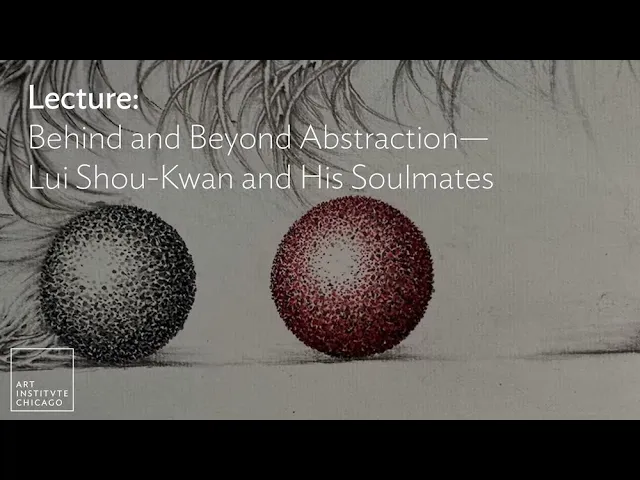
Wang examines the New Ink painting of Lui Shou-Kwan and his artistic soulmates, Irene Chou and Liu Kuo-sung. Moving beyond comparisons with Abstract Expressionism, he explores the Chinese pictorial traditions, mindscapes, and experiences that shaped their work.
May 5, 2023 | Center for the Art of East Asia, University of Chicago
Wang considers how digital scenography can transform the presentation and interpretation of cultural heritage. The lecture addresses immersive exhibition design, sensory experience, and the possibilities of translating art-historical knowledge into digital and spatial environments.
January 13, 2023 | National Gallery Singapore
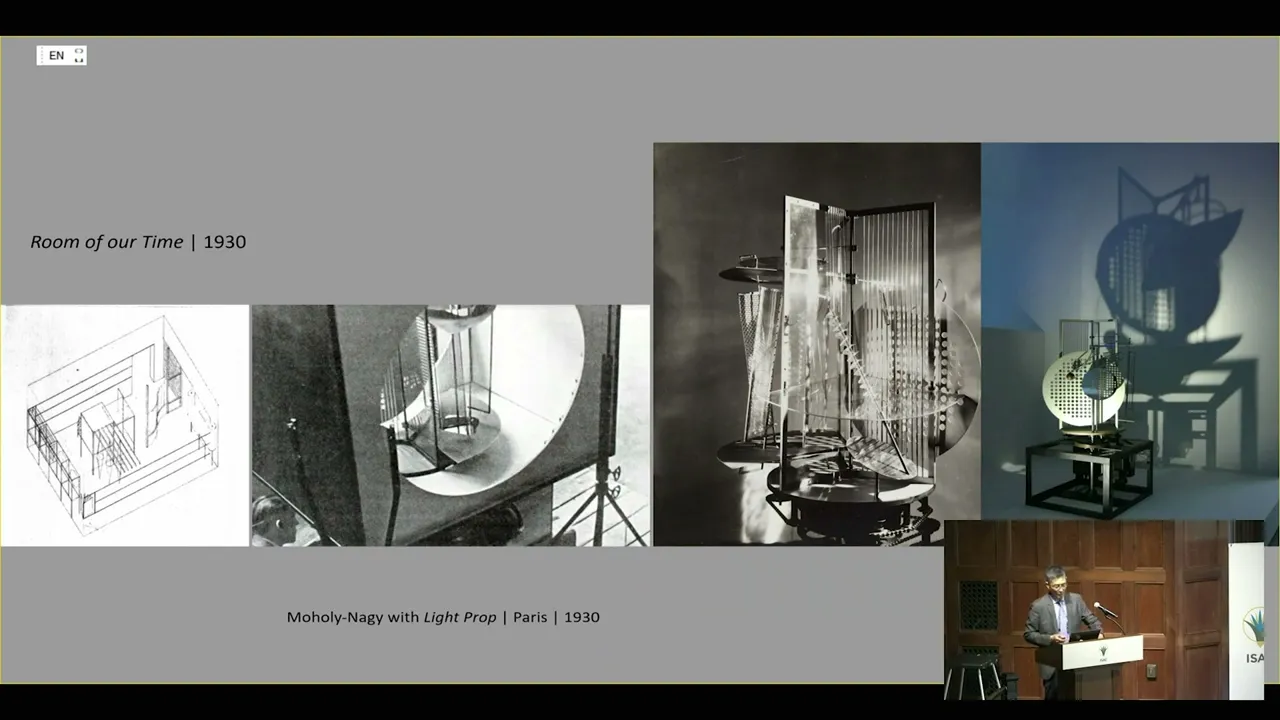
A lecture on Liu Kuo-sung’s modern ink painting. Wang proposes the idea of the ‘psychocosmic’ to describe Liu’s movement beyond conventional abstraction toward a visual language connecting interior consciousness, landscape, planetary imagery, and the cosmos. The program also includes a conversation with Liu Kuo-sung.

September 22, 2021 | Yin-Cheng Distinguished Lecture Series, University of Cambridge
Wang asks what Buddhist art might become in the twenty-first century and whether it must continue to rely on traditional Buddhist iconography. He explores ecological media, natural phenomena, multisensory experience, digital technology, and interconnectivity as possible directions for contemporary Buddhist art.
July 4, 2020 | Transmission of Buddhism in Asia and Beyond Conference
Wang reconsiders the relationship between meditation imagery and Buddhist cave architecture. Rather than assuming that caves decorated with meditation scenes were necessarily used for meditation, he examines how meditation could function as a narrative and conceptual framework linking memory, death, visualization, and transformation.
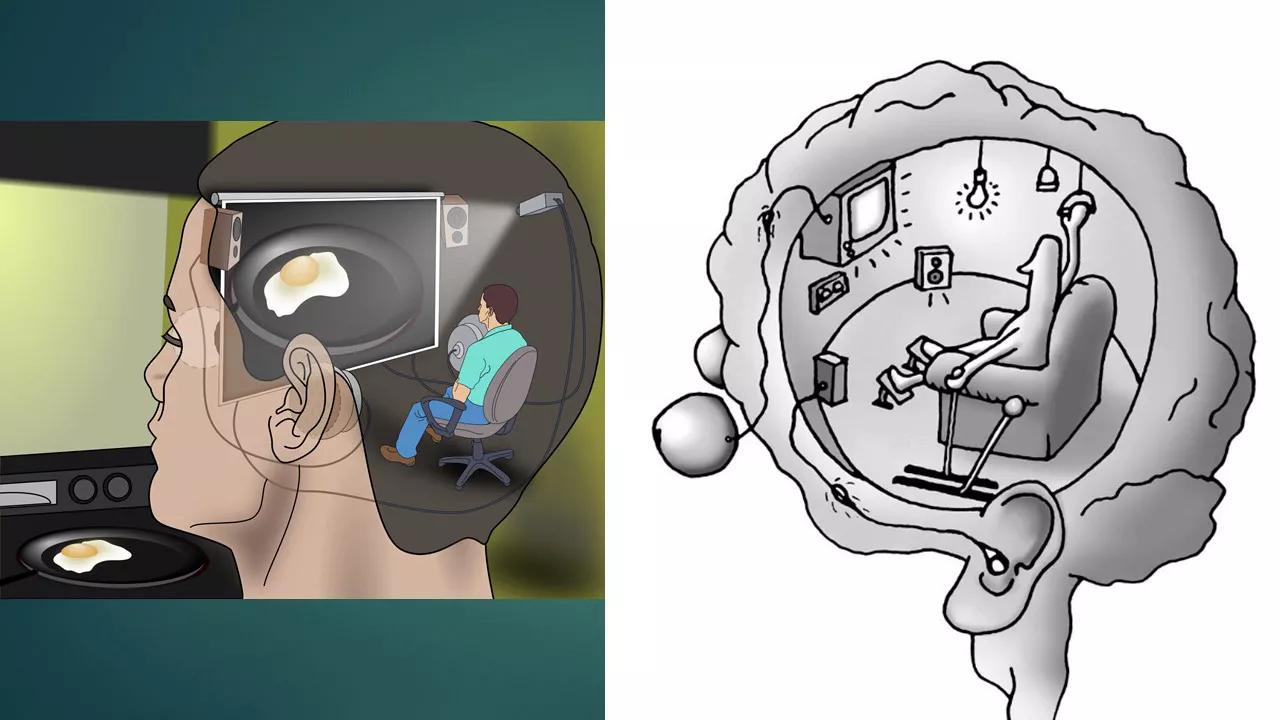
October 6, 2017 | SOAS Centre of Buddhist Studies, University of London
Wang approaches Buddhist caves as premodern immersive environments. Painting, sculpture, architectural space, light, bodily movement, and visualization work together to make otherwise inaccessible Buddhist worlds experientially present, anticipating his later work on immersive media and Buddhist art.
May 10, 2017 | Radcliffe Institute for Advanced Study, Harvard University
A Harvard version of Wang’s reinterpretation of the First Emperor’s terracotta army. He moves beyond the conventional ‘army guarding the tomb’ explanation to examine the warriors, bronze chariots, acrobats, seasonal cycles, and early Chinese ideas of celestial and cosmic movement as parts of an integrated mortuary system.
April 3, 2017 | Haihunhou Symposium, Harvard University
Prompted by the discovery of an image and texts concerning Confucius in the tomb of the Marquis of Haihun, Wang asks why Confucius would appear within a funerary context. The talk considers the intersection of recently excavated material, Han funerary imagery, intellectual history, and the programmatic role of images within the tomb.