Patterns Above and Within
Woven words, cosmic patterns, and inner life.
Online visual essay
A story of woven words, the patterns of heaven, and the inner life.
An illustrated reading of Wang’s essay. Connecting passages paraphrase his argument; quotations retain his original wording.
01

Tradition tells of Su Hui weaving a patterned poem for her distant husband. Instead of following one line, a reader could take different paths through its words.
By Tang times, the design was called the Picture of the Turning Sphere—a name with an astral association.
“The design shows the literal transformation of a text into a picture, and the text masquerading as a picture.”
What could a message of longing have to do with the stars?
Source range: pp. 49–54
02
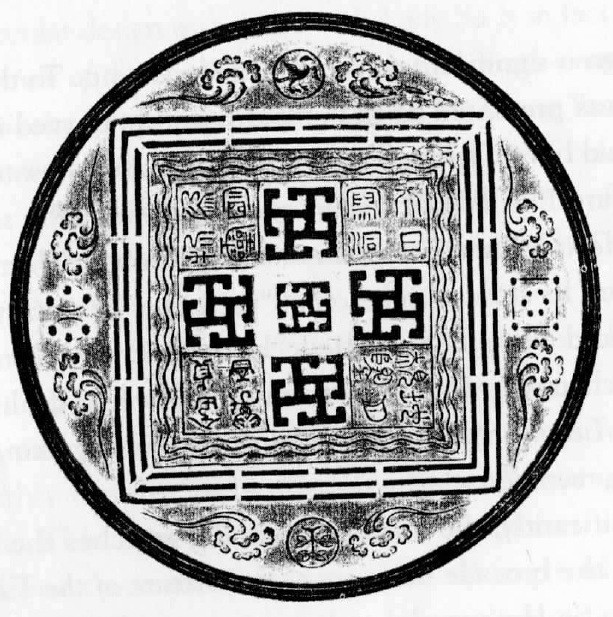
The Turning Sphere evokes the Northern Dipper and the constellations. To explore this astral association, Wang turns to a bronze mirror.
Its outer circle evokes heaven; its inner square, earth. Human writing occupies four small squares. Reading the scattered characters makes the eye jump from place to place.
“The leapfrogging eye spells out a hidden pattern embedded in the design.”
This is a non-linear way of reading. Now follow that moving eye back to woven cloth.
Source range: pp. 52, 55–58
03
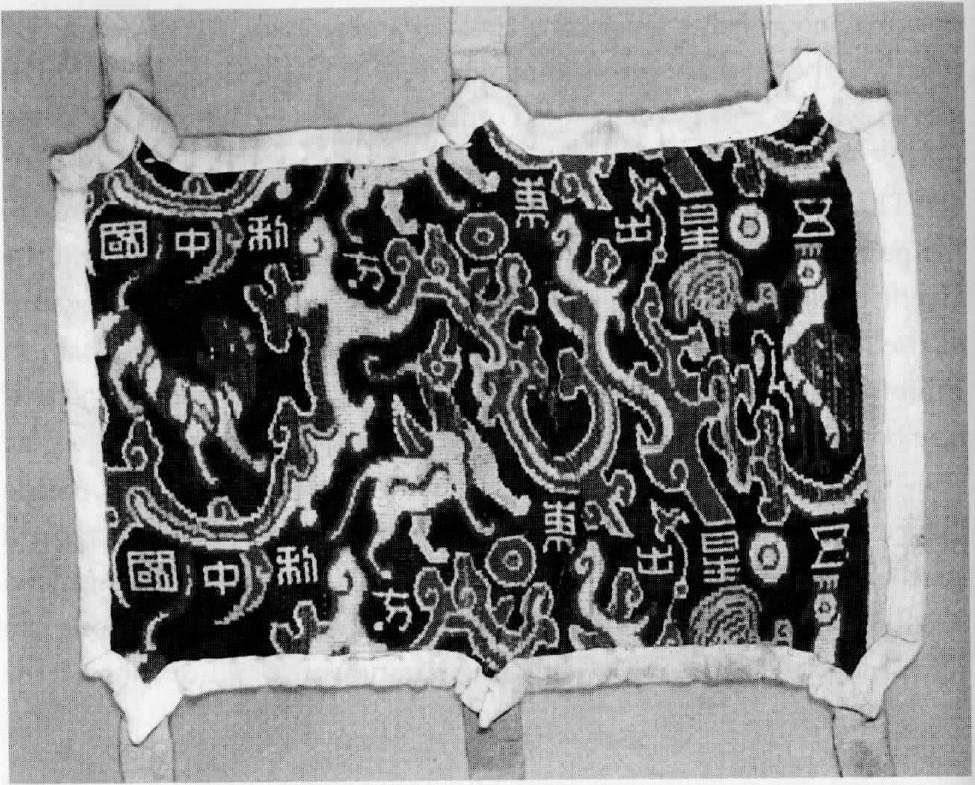
On this brocade, written characters share the fabric with animals, clouds, and signs of the planets.
Words become part of the ornament, while the ornament begins to act like writing. The woven pattern brings textile, text, and the heavens into the same field.
“Ornamental pattern (wenzhang) begins to take on overtones of writing, and vice versa.”
But a pattern of the heavens can do more than describe a cosmic order. Can it also speak to one person?
Source range: pp. 59–66
04
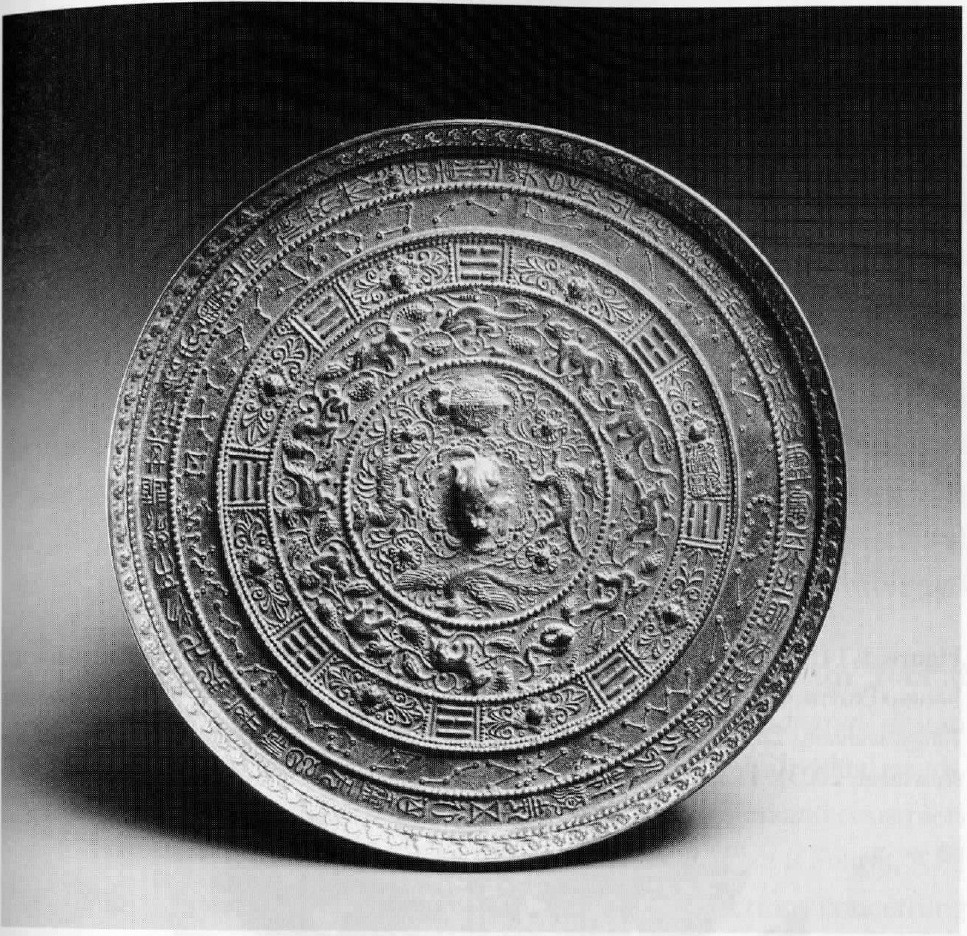

Look first at the mirror. Its cosmic pattern promises good fortune to the person who holds it. Now look at the dharani: rings of writing enclose a donor and a deity.
Wang traces a movement from an impersonal cosmic order toward individual life—a private space within.
Of the dharani’s enclosed space, Wang writes:
“It appears to oscillate between macrocosm and microcosm, the transcendent sphere above and private space within.”
The pattern above has begun to turn inward. What happens when that inner life is filled with longing?
Source range: pp. 66–73
05
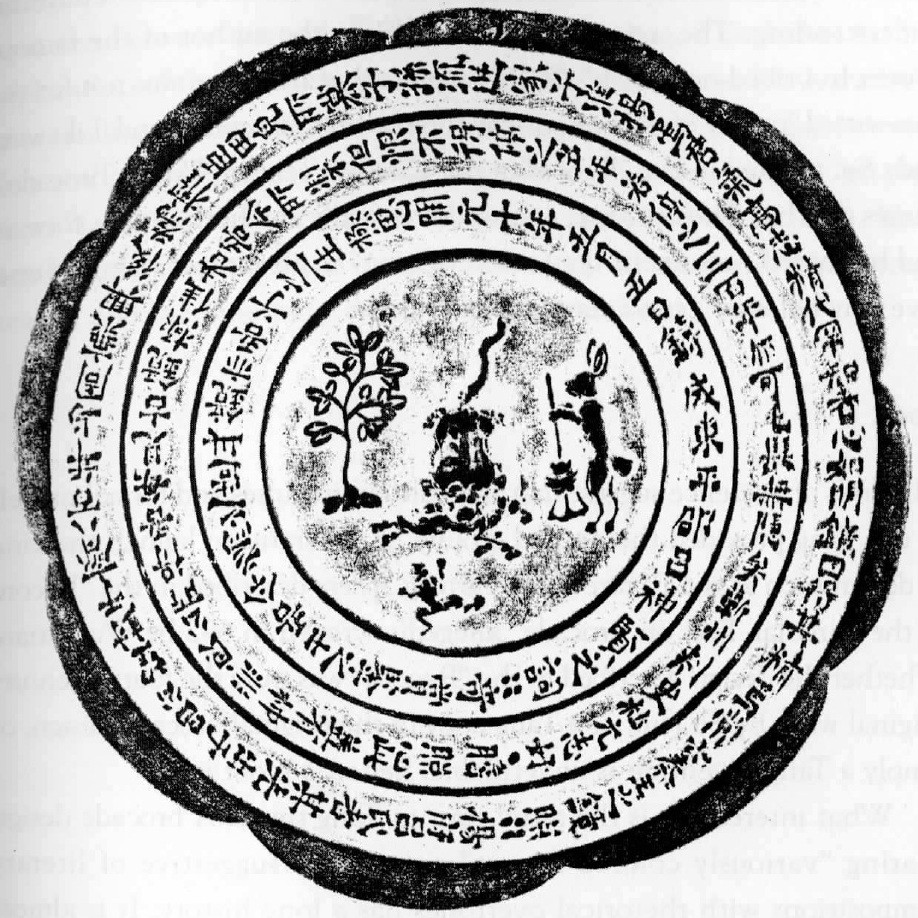
We began with a message of longing. A circular text gives that feeling a form: with no clear beginning or ending, it turns back on itself.
On this mirror, concentric inscriptions surround a moonscape. For Wang, the astral pattern can carry a hidden pattern of inner sentiment, waiting for a discerning reader.
“Matters of heaven amount to matters of the heart.”
The sky and the heart are now part of the same story. What remains of the woven design that set us on this path?
Source range: pp. 73–79
06

Su Hui’s original is lost, and no Tang version survives. Later copies and reconstructions keep inviting readers to find new paths through the words.
This image is one such modern reconstruction. We return to our opening puzzle: how can writing become a picture, and a cosmic pattern carry an intimate feeling?
Wang concludes:
“More significantly, it resulted in a visual form through which one can both reach heaven and the innermost recess of the human heart.”
The journey from the patterns above to the life within continues in the full essay.
Source range: pp. 78–83
Eugene Wang, “Patterns Above and Within: The Picture of the Turning Sphere and Medieval Chinese Astral Imagination,” in Books in Numbers, ed. Wilt L. Idema (2007), pp. 49–89.